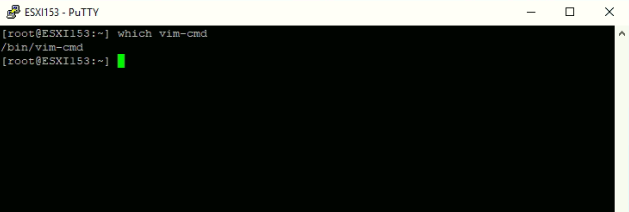
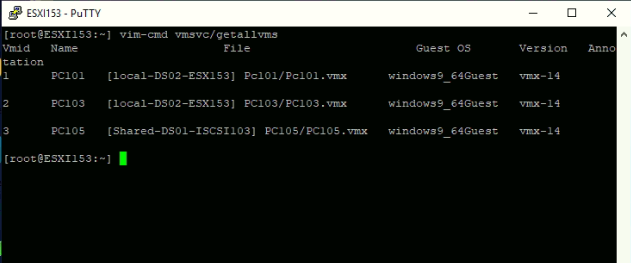
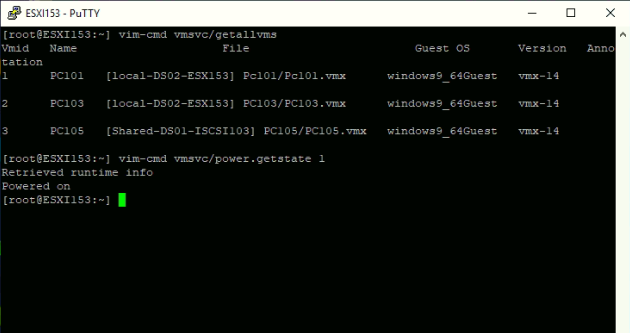
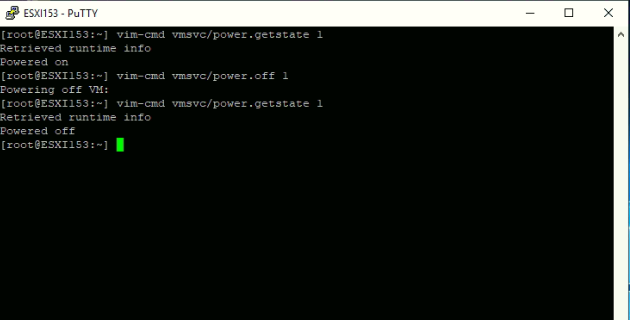
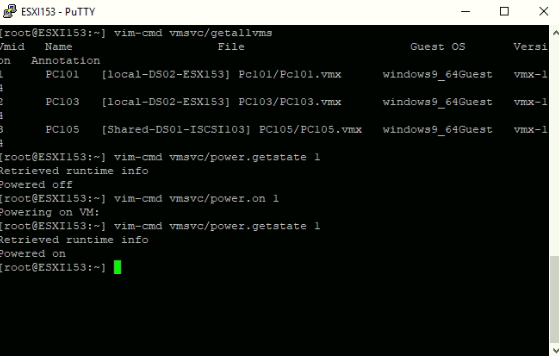
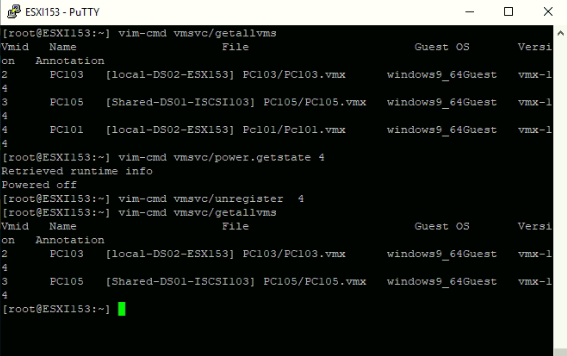
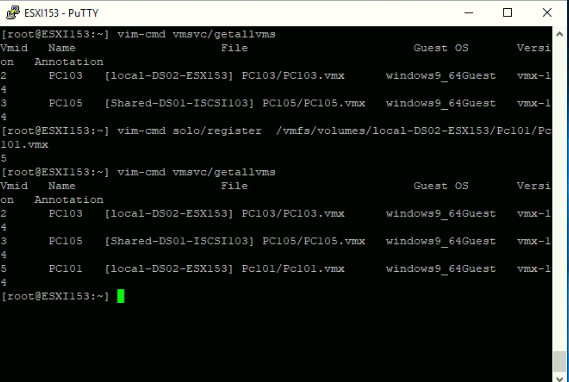
VIM-CMD : power and register VM vSphere-O&S July 2, 2020July 4, 2020 maher islaieh introduction Welcome to the first article of VIM-CMD tool series as part of course vSphere-O&S In first article we will get an introduction to tool VIM-CMD , before see how to use it to manage all vSphere resources [ Network , Storage ….etc ] what is VIm-CMD vim-cmd is a vSphere CLI tool available on every ESXi host and can be used to perform various activities in a VMware environment.as you know that VIM is stand for (Virtual Infrastructure Management). where command located on ESXI On ESXi, the vim-cmd is at /bin/vim-cmd, which is actually a symbolic link to a host executable as shown in the following For Better View > Open Image in different TAB get all VM in ESXI vim-cmd vmsvc/getallvms For Better View > Open Image in different TAB Get specific VM status vim-cmd vmsvc/power.getstate 1 get power status of VM id =1 which Pc101 in command above For Better View > Open Image in different TAB power-off specific VM vim-cmd vmsvc/power.0ff 1 For Better View > Open Image in different TAB power-on specific VM vim-cmd vmsvc/power.on 1 For Better View > Open Image in different TAB unregister VM first we get all registered VMs with command vim-cmd vmsvc/getallvmswe will unregister Pc101 with ID 1 vim-cmd vmsvc/power.getstate 1 since VM is powered off >> we can unregister it with command vim-cmd vmsvc/unregister 1 For Better View > Open Image in different TAB register VM first we get all registered VMs with command vim-cmd vmsvc/getallvmswe have 2 VM so we will register Pc101 which will path is [/vmfs/volumes/local-DS02-ESX153/Pc101/Pc101.vmx] vim-cmd solo/register /vmfs/volumes/local-DS02-ESX153/Pc101/Pc101.vmx For Better View > Open Image in different TAB